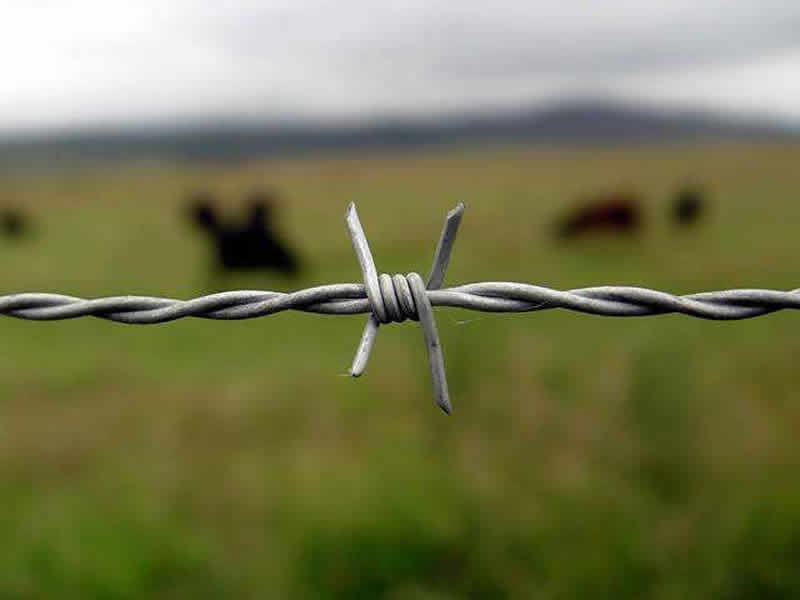
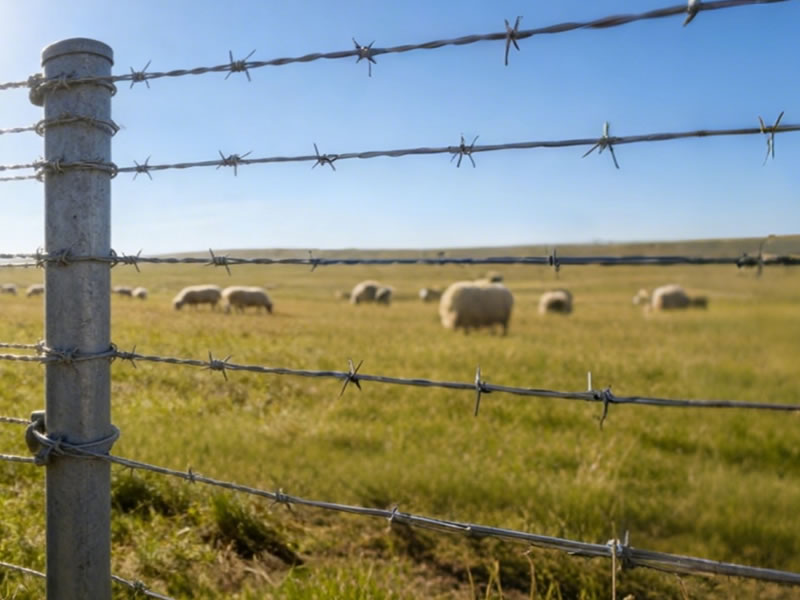
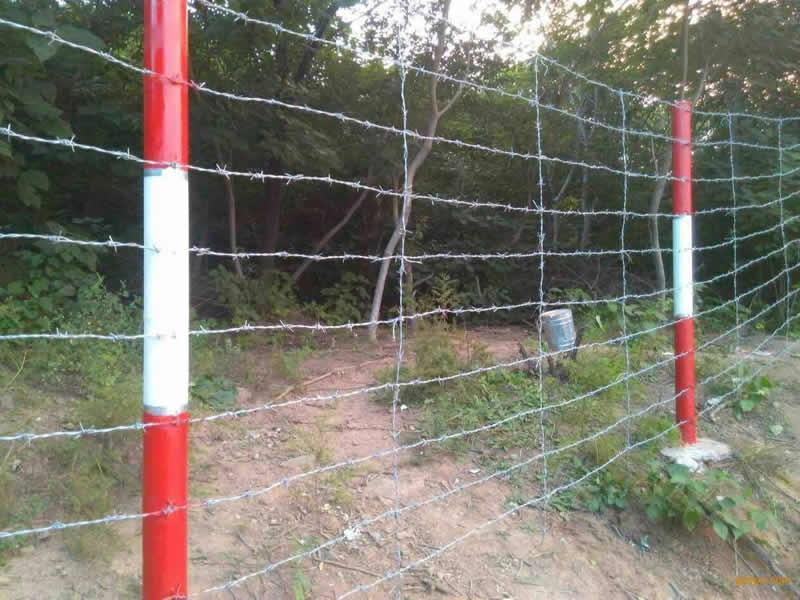
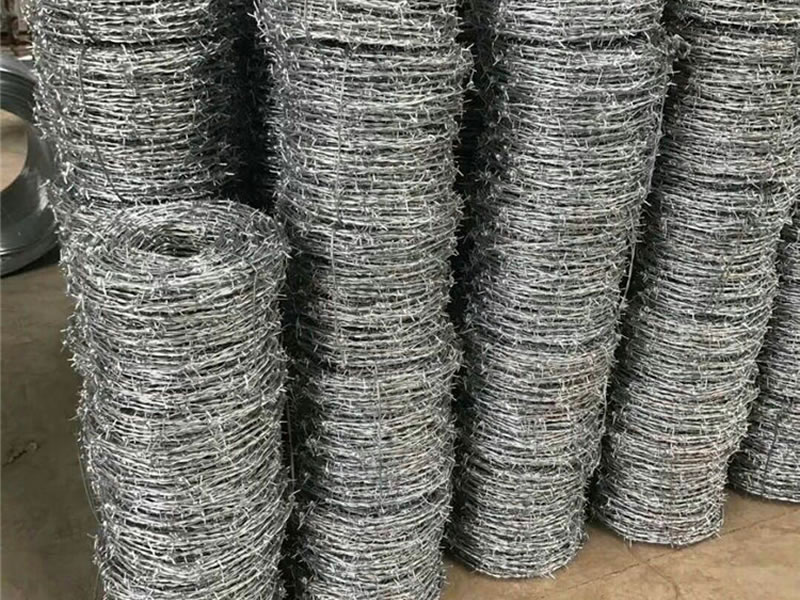
Barbed wire is a practical and cost-effective fencing material designed for perimeter security and boundary control. It is widely used in agriculture, industrial zones, highways, military areas, and private properties. With sharp barbs twisted onto high-strength steel wire, barbed wire creates an effective physical and psychological deterrent against intrusion while remaining easy to install and maintain.
Specifications
- Material: High-tensile steel wire or low-carbon steel wire
- Surface Treatment: Hot-dip galvanized, electro-galvanized, or PVC coated
- Corrosion Resistance: Galvanized coating provides long-term resistance to rust and weather exposure
Wire Structure
- Strand Type: Single-strand or double-strand twisted wire
- Barb Type: Two-point or four-point barbs
- Barb Spacing: Commonly 7.5 cm, 10 cm, or customizable
- Wire Diameter: Typically 1.6 mm–2.5 mm (custom sizes available)
Packaging
- Supplied in coils or rolls, securely packed for easy transportation and installation.
Classification
- Galvanized Barbed Wire: The most common type, offering a balance of strength, durability, and cost efficiency.
- PVC Coated Barbed Wire: Enhanced corrosion resistance with added color options, suitable for humid or coastal areas.
- High-Tensile Barbed Wire: Designed for higher strength and longer spans, ideal for large-scale fencing projects.
Features
- Effective Security: Sharp barbs deter climbing and unauthorized access.
- Strong and Durable: Resistant to tension, impact, and harsh weather conditions.
- Cost-Effective: Low material and installation costs compared to other fencing systems.
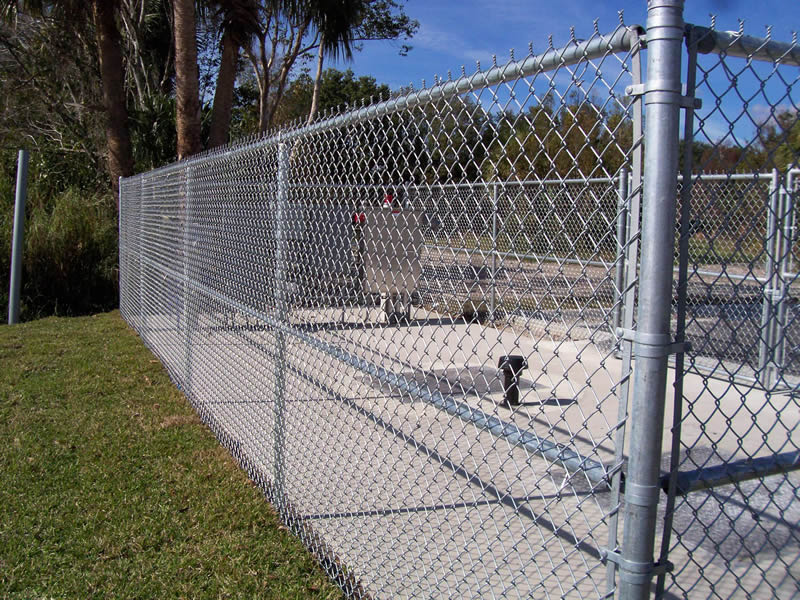
- Easy Installation: Can be installed alone or combined with wire mesh fences, chain link fences, or steel posts.
- Wide Application: Suitable for farmland, livestock fencing, factories, highways, borders, and restricted areas.